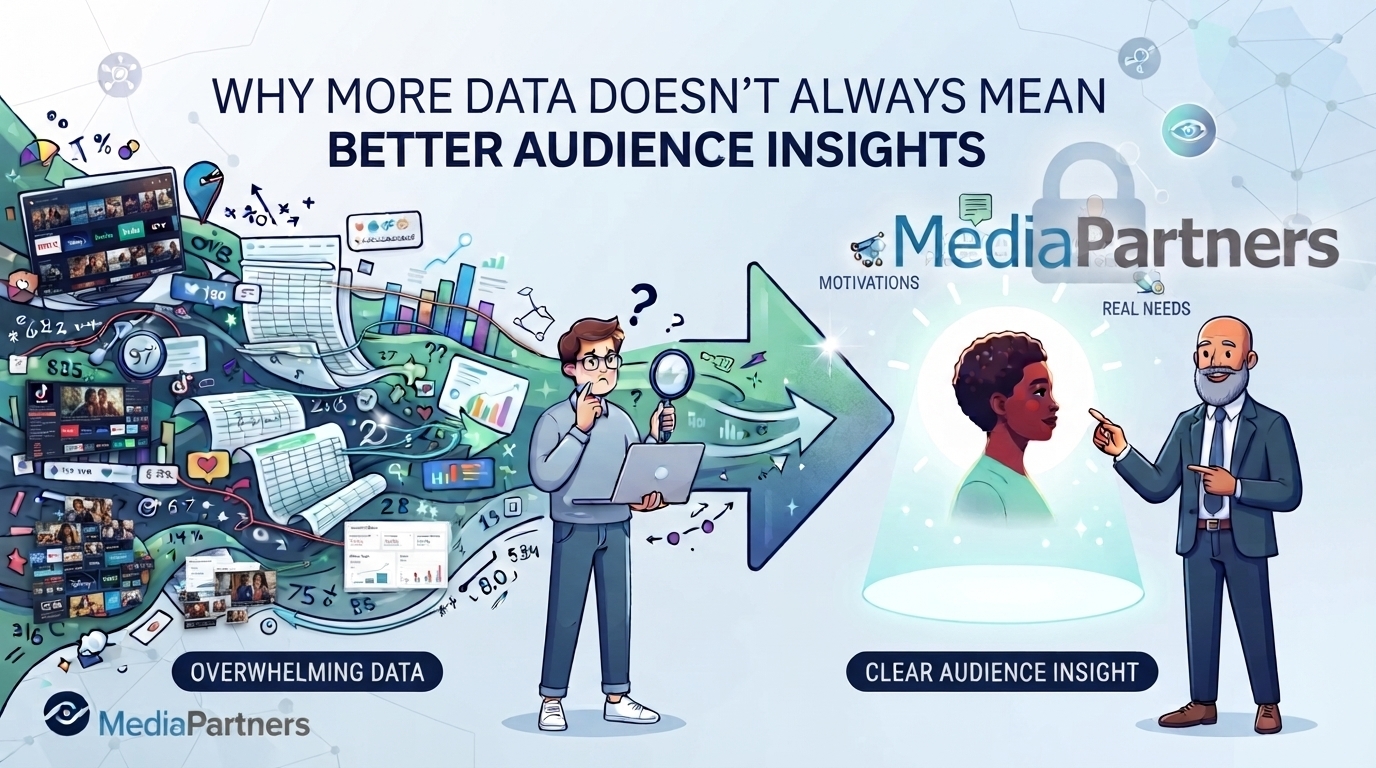
We have more data than ever before. Yet we may understand the total audience less than ever.
As audiences fragment across Broadcast TV, BVOD, Kayo/Foxtel, YouTube, Netflix, Prime Video, Disney+ and other walled gardens, cross-platform measurement is becoming increasingly complex.
Each platform can tell us a lot about what happens inside its own ecosystem.
Understanding what happens across them is much harder.
And that creates an interesting paradox. We have more data than ever before, but potentially less ability to understand the total audience.
As the industry embraces AI, attribution, media mix modelling (MMM) and increasingly sophisticated measurement frameworks, I keep coming back to a few questions:
– Can we genuinely measure 90%, 1+ reach across a fragmented video ecosystem?
– Can we confidently deduplicate audiences across platforms?
– Or are we increasingly relying on models and estimates to fill the gaps between them?
Don’t get me wrong. Modelling isn’t the problem. In fact, AI, attribution and MMM all have an important role to play.
But as investment continues shifting towards streaming and VOD, we need to be clear about three things –
– What we know.
– What we measure.
– What we estimate.
At Media Partners, this is a challenge we’re actively working through for our clients. We bring together the insights, identify potential across platforms and overlay sales and conversion data to build a broader view of performance. Because the objective isn’t simply to optimise media metrics. It’s to understand how media investment contributes to business outcomes.
– Reach matters.
– Frequency matters.
– CPM matters.
But they’re all proxy metrics. Ultimately, the question is, “Did the investment create the business outcome we were trying to achieve?”
Measurement shouldn’t just help us understand media. It should help us make better business decisions.
So here’s the question: Are we making measurement more sophisticated, or simply more complicated?